Please label diagrams clearly. Draw in pencil!
Monday, August 19, 2013

Q&A from 206
1) Hidayah/ Danial/Tiffany/Haikal/Eunice/Cynthia: What does the drainage basin do? How does it works?
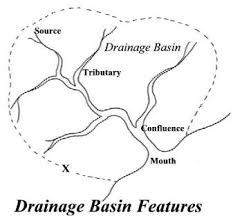
Miss ST: A drainage basin is an area land where water from rain / snow flows and joins into another waterbody, such as a river or the sea. It shows how water moves from the ocean, into the air, converted into clouds, falls as rains and flows in the ground.
2) XinYi/Xuan Qi: Why is there a water cycle? Why do we need the river system?

Miss ST: The water cycle is a natural process that occurs on earth. It is the flow of water in our environment in liquid/solid to gaseous form. We need the river system as it helps to purify and replenish our supply of water.
3) Xuan Qi/XinRui: How important is it? Does it help us? Why do we need a river system?

Miss ST: Water in the rivers helps to transport nutrients and sediments, which is important in farming. This will benefit and help us. Water from the rain will also replenish the supply of water in the rivers and reservoirs, this provides our source of water for drinking.
4) Chun Kit: How does the hydrological cycle work?
Miss ST: Hope this animation explains the cycle clearer to you.
http://www.youtube.com/watch?v=xdQdP6eZTUs
5) Tiffany: Why do the drainage basin look like a tree?

Miss ST: The smaller branches are actually small streams of rivers from the top of the mountains flowing downwards, we call it tributaries. Eventually it connects to the confluence, which is the main river channel, and joins up. As it flows down towards the river mouth, it joins into the sea.
6) Tiffany/Zhi Wei/XinRui/Rachel/Whitney/Rios: What is the difference between condensation and precipitation? Does it have the same meaning? What is precipitation?
 Condensation process
 Precipitation
Miss ST: Condensation is the process whereby water is changed from gas to liquid state. This is a PROCESS that is happening. Precipitation is referring to the RAIN. Precipitation is not the same as condensation.
7) Zhiwei/Rachel: What is transpiration?

Miss ST: Transpiration is the evaporation of water into the atmosphere from the leaves and stems of plants.
8) Rachel/Clester: What is surface run off?

Miss ST: Surface runoff is water, from rain, snowmelt, or other sources, that flows over the land surface. It usually occurs when the water does not flow into the soil.
9) Shao Yang/Xin Yee/ Xuan Qi: What is the difference between Infiltration and Percolation?

Miss ST: Good Question! Infiltration is the movement of water from the ground surface into the ground layers.. Percolation of water is the movement of water down through the soil until it reaches the water table. Percolation happens at a DEEPER layer underground whereas Infiltration is at the layer nearer to the ground surface.
10) Eunice: What does the streams in a drainage basin do?

Miss ST: The streams are called tributaries and they help to collect water from the rain and snow. The water in the streams then flows into the main river, which may link to the sea, or lake.
Miss ST: A drainage basin is an area land where water from rain / snow flows and joins into another waterbody, such as a river or the sea. It shows how water moves from the ocean, into the air, converted into clouds, falls as rains and flows in the ground.
2) XinYi/Xuan Qi: Why is there a water cycle? Why do we need the river system?
Miss ST: The water cycle is a natural process that occurs on earth. It is the flow of water in our environment in liquid/solid to gaseous form. We need the river system as it helps to purify and replenish our supply of water.
3) Xuan Qi/XinRui: How important is it? Does it help us? Why do we need a river system?
Miss ST: Water in the rivers helps to transport nutrients and sediments, which is important in farming. This will benefit and help us. Water from the rain will also replenish the supply of water in the rivers and reservoirs, this provides our source of water for drinking.
4) Chun Kit: How does the hydrological cycle work?
Miss ST: Hope this animation explains the cycle clearer to you.
http://www.youtube.com/watch?v=xdQdP6eZTUs
5) Tiffany: Why do the drainage basin look like a tree?
Miss ST: The smaller branches are actually small streams of rivers from the top of the mountains flowing downwards, we call it tributaries. Eventually it connects to the confluence, which is the main river channel, and joins up. As it flows down towards the river mouth, it joins into the sea.
6) Tiffany/Zhi Wei/XinRui/Rachel/Whitney/Rios: What is the difference between condensation and precipitation? Does it have the same meaning? What is precipitation?
Condensation process PrecipitationMiss ST: Condensation is the process whereby water is changed from gas to liquid state. This is a PROCESS that is happening. Precipitation is referring to the RAIN. Precipitation is not the same as condensation.
7) Zhiwei/Rachel: What is transpiration?
Miss ST: Transpiration is the evaporation of water into the atmosphere from the leaves and stems of plants.
8) Rachel/Clester: What is surface run off?
Miss ST: Surface runoff is water, from rain, snowmelt, or other sources, that flows over the land surface. It usually occurs when the water does not flow into the soil.
9) Shao Yang/Xin Yee/ Xuan Qi: What is the difference between Infiltration and Percolation?
Miss ST: Good Question! Infiltration is the movement of water from the ground surface into the ground layers.. Percolation of water is the movement of water down through the soil until it reaches the water table. Percolation happens at a DEEPER layer underground whereas Infiltration is at the layer nearer to the ground surface.
10) Eunice: What does the streams in a drainage basin do?
Miss ST: The streams are called tributaries and they help to collect water from the rain and snow. The water in the streams then flows into the main river, which may link to the sea, or lake.
Sunday, August 18, 2013
Thursday, August 15, 2013
Q&A from 207 on Rivers Hydrological cycle and Drainage system/basin
Hi Class, these are the answers to your questions:
Q1) Linus/Darren Heng/Jiaqi/Sheryl/Wei Teng/Jun Hao/Bastian: What is the hydrological cycle and why does it happen? How does the process helps Nature?

Miss ST: The hydrological cycle( H2O cycle) is the continuous movement of water on, above and below the surface of the Earth. Water moves from reservoirs, rivers, oceans and to the atmosphere.

Q4) Aloysius/Matthew: What is Evapotranspiration?
Miss ST: It refers to all the Evaporation and plant transpiration from the Earth's land surface to atmosphere. Evaporation is the movement of water to the air from sources such as the soil, canopy interception, and waterbodies. Transpiration is the movement of water within a plant and the subsequent loss of water as vapor through leaves.


 Miss ST: This is an Example of a drainage basin. The dashed line is the main water divide of the river basin. It is an area of land where surface water from rain/snow converges(connects) to the end of the river. It is a water catchment area and is part of the hydrological cycle. Yes it is important as part of the water cycle. You have to know how to label it and its different components.
Q1) Linus/Darren Heng/Jiaqi/Sheryl/Wei Teng/Jun Hao/Bastian: What is the hydrological cycle and why does it happen? How does the process helps Nature?
Miss ST: The hydrological cycle( H2O cycle) is the continuous movement of water on, above and below the surface of the Earth. Water moves from reservoirs, rivers, oceans and to the atmosphere.
The water cycle purifies water, replenishes the land with freshwater, and transports minerals to different parts of the globe. It is also shapes the geological features of the Earth, through erosion and sedimentation. Finally, the water cycle figures significantly in the maintenance of life and ecosystems.
Q2) Siang Yih: How does the river works and how does people collect a big amount of rain?
Miss ST: Refer to the top answer on hydrological cycle. Rain is collected in the water catchment area such as reservoirs.
Q3) Darren Tan: What are the four main parts of the water cycle?

Miss ST: The main parts of the water cycle are the processes of evaporation, condensation, infiltration and runoff. In doing so, the water goes through different stages: liquid, solid (ice), and gas (vapor).
Q4) Aloysius/Matthew: What is Evapotranspiration?
Miss ST: It refers to all the Evaporation and plant transpiration from the Earth's land surface to atmosphere. Evaporation is the movement of water to the air from sources such as the soil, canopy interception, and waterbodies. Transpiration is the movement of water within a plant and the subsequent loss of water as vapor through leaves.

Miss ST: Please refer to the distribution of Earth's water below.

Q6) Jun Jie/Cherlyn/Natalie/Audrey: What is a river? How is a river form? Why is there a river?
Miss ST:A river is a natural watercourse that flows towards an ocean, a lake, a sea, or another river. Sometimes a river simply flows into the ground or dries up completely at the end of its course, and does not reach another body of water.
Rivers are part of the hydrological cycle and forms from Water collected in precipitation and the release of stored water in natural ice and snowpacks (e.g. from glaciers).
Q6a) Jeremy/Sheena/Simon: What is percolation?
Miss ST: It is the slow movement of water through the soil and rocks.

Q7) Nisha/Sheena: Is there a difference between ground waterflow and infiltration?
Miss ST: Ground waterflow refers to the part of streamflow that has infiltrated the ground. Infiltration is the process in which the water on the ground surface enters the soil.
Q8) Liyi: How is the river connected to the sea?
Miss ST: The lower course of the river flows towards the sea, and is connected at the RIVER MOUTH.

Q9) Jeremy: What is the difference between the source and the mouth?
Miss ST: The source of the river is where it starts, and is at the UPPER course of the river. The mouth of the river is where it ends, and is at the LOWER course of the river.
Q10) Gigi: What is confluence?
Miss ST: a confluence is the meeting of two or more bodies of water. It refers either to the point where a tributary joins a larger river, called the main stem, or where two streams meet to become the source of a river.
Q11) Kieran: What is sediment?
Miss ST: Sediment is a naturally occurring material that is broken down by processes of weathering and erosion. It refers to sand, rocks, and other particles found in the river.
Q12) Zachary/Jonas/Benjamin/Sherwin/Andrea/Simon: What is a drainage basin and what is it for? Is it important?
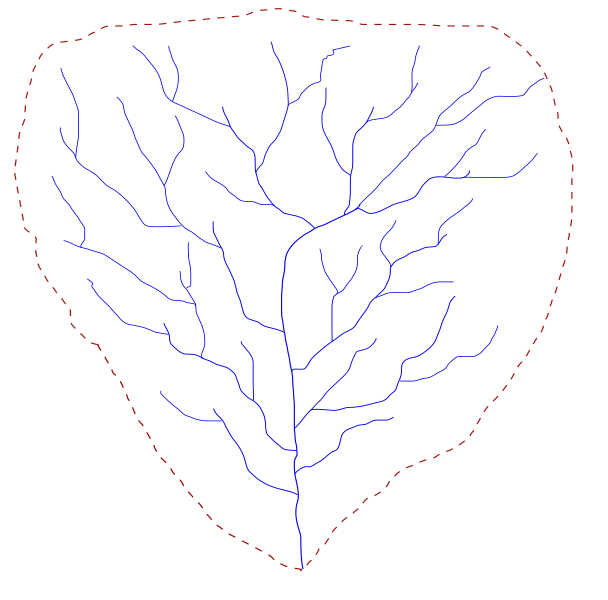 Miss ST: This is an Example of a drainage basin. The dashed line is the main water divide of the river basin. It is an area of land where surface water from rain/snow converges(connects) to the end of the river. It is a water catchment area and is part of the hydrological cycle. Yes it is important as part of the water cycle. You have to know how to label it and its different components.
Q13) Kelly: What is airborne?
Miss ST: It depends on how you are using the word. In Geography, it refers to something that is Carried by or through the air. eg Airborne particles are carried in the air.
Q14: Anoymous: What is a Delta?
Miss ST: You will learn about this in the next two lessons.
Monday, August 12, 2013
Rivers part 3 - Delta, meanders, positive and negative impacts
Important - to know the positive and negative impacts of how rivers affect us.
Subscribe to:
Posts (Atom)